The court will initiate liquidation ex officio. It will appoint a liquidator, and you will no longer have a say in how the process is handled, how much it will cost, or how quickly it will be resolved.
The liquidator has the right to examine your accounts, contracts, and past transactions. If something doesn't add up, it could be turned against you.
And if the company had debts, you may still be liable for them—especially if you breached your duties as a director.
Consultation with an attorney
With a legal and accounting expert on liquidation and our own liquidator, you can be sure that the solution is permanent and legally sound. Get in touch with us.


Even in compulsory liquidation, you have the opportunity to assist and, to a certain extent, protect your interests. We will represent you and communicate with the court-appointed liquidator. We will ensure that the process is carried out in accordance with the law.
We will protect your rights and your assets, if the company owns any, and we will handle communication with the liquidator on your behalf.
We can help you even in such a case, but if you can, do not let the situation reach this point.
Tell us about your situationYes, it is possible. This typically occurs when, as a result of a transformation process, the company's assets and liabilities are transferred to its legal successor, i.e., another entity. The company then continues to operate and conduct business through this successor.
In certain cases, a company may be dissolved without liquidation during insolvency proceedings if it has no eligible assets.
In exceptional cases, a court will dissolve a company without liquidation if it is a company that, despite being prompted, fails to file financial statements with the collection of deeds, has no assets, and cannot be contacted.
In the first step of the company liquidation process, the shareholders (or the court) decide to dissolve the company and enter it into liquidation.
Simultaneously, a liquidator is appointed, often the company's statutory body, i.e., the executive or a member of the board of directors. At the beginning of the liquidation, the liquidator determines the status of the company's assets and liabilities and prepares the relevant financial documentation.
Subsequently, they focus on settling the company's liabilities (paying debts, collecting receivables, and terminating contractual obligations) and liquidating its assets.
If any funds remain after all of the company's liabilities have been paid, they are distributed among the company's shareholders.
At the same time, it is necessary to ensure the processing of the required accounting documentation and the relevant approvals from public authorities (especially the tax office) for the purpose of the subsequent deletion of the company from the Commercial Register.
After completing the above steps, a proposal for the deletion of the company from the Commercial Register is filed, and with this deletion, the company ceases to exist.
The liquidation process often takes several months; it is a long-term process in which statutory deadlines must be observed.
For companies undergoing a simple liquidation, it can be assumed that the process will take approximately six months, though in complicated cases, it may take significantly longer.
A liquidator is a special body of a business corporation tasked with carrying out its liquidation.
Upon appointment, the liquidator assumes the powers of the company's statutory body, but only to the extent necessary to fulfill the purpose of the liquidation.
The liquidator must meet the requirements imposed by law on members of a company's statutory body and must therefore be fully legally competent and of good character.
Absolutely. It is the safest way to end a company's operations in compliance with the law, as it allows you to maintain control over the settlement of liabilities and the potential liquidation of assets.
If an inactive company is simply "left" in the Commercial Register without further attention, the company's executive and its shareholders expose themselves to further obligations, as well as the risk that such an inactive company will be sanctioned by being dissolved by the court.
Liquidation is intended primarily for companies that have sufficient assets to satisfy their liabilities. If a company is over-indebted and lacks sufficient assets to satisfy these liabilities, its debts are addressed and settled through insolvency proceedings.
The total cost of the complete liquidation process depends on the complexity of the planned liquidation, i.e., the company's status and the scope of its liabilities and assets.
For an uncomplicated liquidation of a company with no liabilities or assets, the price is in the tens of thousands of CZK.

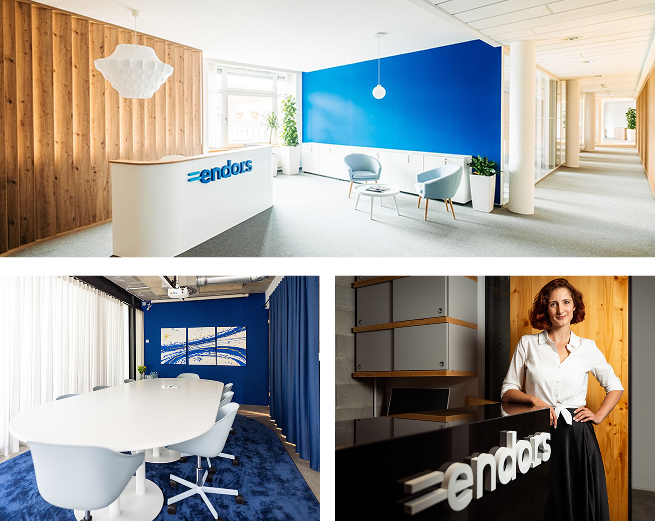
With offices in Prague 1, Prague 4, and Hradec Králové, endors brings together a team of 40+ lawyers covering 20+ specializations. We pride ourselves on a personal approach and a deep understanding of our clients' needs. Every client is assigned a dedicated attorney who has a detailed knowledge of their industry and specific requirements.
Attorney and partner at endors. An experienced expert in commercial and contract law with over 23 years of experience in the Czech Republic and abroad.
Managing Partner, founder of the firm, and quality guarantor. He focuses on litigation and complex acquisition advisory – contracted deals in 50+ countries. An athlete at heart, he has completed 8+ Ironman series triathlons.
 Our Team