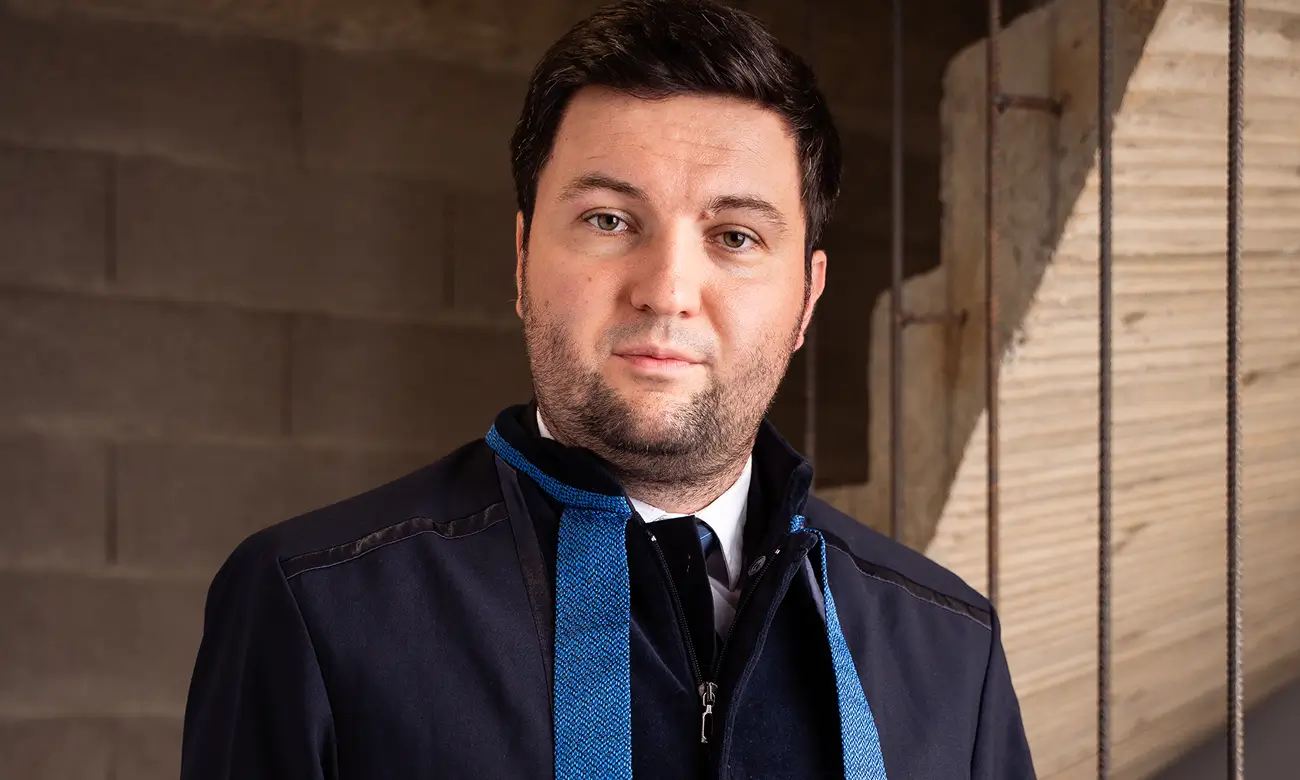
Attorneys Petr MotyčkaandZuzana Brečková from the endors law firm also discuss the entire topic of diversions and plea bargains in detail in this video.
Are you dealing with criminal prosecution and want to know what your options are? Get in touch with us. trestni@endors.cz | +420 721 208 275
A diversion is an alternative way to conclude criminal proceedings. Instead of the standard path, i.e.:
the whole matter is resolved sooner, more simply, and generally with a better outcome for the accused. What exactly do we mean by that "better outcome"?
Petr Motyčka summarizes it in three points: "First, a more lenient sentence and a potentially clean criminal record. Second, shorter proceedings. Instead of months, the whole matter can be a question of weeks. Third, lower costs. Because the proceedings are shorter, it means less work for all parties."
As the name suggests, a diversion is an alternative way of concluding criminal proceedings – we divert from the standard path and the main trial.
The accused generally admits to the act and, in exchange, receives a lighter sentence, a shorter process, or the possibility of leaving without a criminal record.
Petr Motyčka describes how it looks in practice: “The initial step is that the defense attorney must take the initiative with the public prosecutor. As a rule, the prosecutor does not offer a diversion – the defense attorney must be the one to propose it."
The lawyer calls the public prosecutor and says something to the effect of: “I am this client's lawyer. I want to offer him all the options. Purely theoretically – if the client were to confess, what kind of sentence range would we be looking at?”
At that moment, the lawyer is not saying that the client is confessing. It is just a probe. And the public prosecutor generally reacts in one of three ways.
However, experience shows that if we approach the public prosecutor at an earlier stage of the proceedings, you will usually receive an offer.

It is necessary to mention right from the start that a diversion is not suitable for every case. For it to be an option, the accused must generally admit that the act took place.
"If a client clearly says, "I didn't commit it and I want to defend myself," that is a completely legitimate stance, and we will proceed along the standard path to court," says Petr Motyčka. "But it is fair for a lawyer to tell the client about all the options that exist. And there are basically two – a hard defense or a diversion.."
The second thing is timing. During the preparatory proceedings, you can negotiate directly with the public prosecutor – informally, with predictable feedback. Once the matter reaches court, this flexibility disappears. It is therefore best to set the strategy for criminal proceedings as early as possible.
Does it make sense to consider a diversion for your case as well? Get in touch with us. trestni@endors.cz | +420 721 208 275. Or fill out form on our website.
A conditional suspension of criminal prosecution is one of the diversionsafter which you can walk away without a criminal record.
The public prosecutor or the court may decide to conditionally stay your criminal prosecution. They will set a probationary period – usually between six months and two years. During this time, you must behave properly, must not commit another criminal offense, and if there was any damage in the case, you should compensate for it or at least take steps toward doing so. If you successfully complete the probationary period, the criminal prosecution is permanently stayed.
Zuzana Brečková summarizes the conditions as follows: “You must admit that the act occurred. You must address the damages – although in the case of a conditional stay, they do not necessarily have to be fully paid; it is sufficient to reach an agreement on compensation with the victim or take measures that lead to it. Finally, both the court and the public prosecutor will take into account the severity of the act and your personal circumstances. If you have no criminal record and have not yet utilized a diversion, your chances are significantly higher.."
A public prosecutor can decide on a conditional stay as early as the preliminary proceedings. You do not have to wait for a court hearing.
A settlement works similarly to a conditional stay of criminal prosecution, but with one fundamental difference: the criminal prosecution is stayed immediately without a "probationary period."
What both institutions have in common is that after their successful completion, you have no criminal record. For clients for whom a clean record is crucial – entrepreneurs, managers, people with security clearance – this is often the deciding factor.
The price for this? Higher requirements. The damage must either be fully compensated before the settlement is approved, or at least 30% of the damage must be covered, with the accused committing to compensate the victim for the remaining amount in installments within an agreed timeframe. Alternatively, the public prosecutor may also impose an obligation to contribute a certain amount to an account for victims of crime.
Do you want to know if a conditional stay or a settlement is an option in your situation? Call us and we will evaluate it with you. +420 721 208 275

A plea bargain is the most powerful toolfor concluding criminal proceedings with a predictable outcome. Unlike a conditional stay or a settlement, it can also be used for more serious criminal offenses.
A plea bargain can be initiated as soon as criminal proceedings begin. You do not need to wait for an indictment or the main trial. In fact, the sooner you discuss a plea deal with your lawyer, the better. Timing directly affects the severity of the sentence. Furthermore, it is no longer possible to enter into a plea agreement once evidence has begun to be presented at the main trial.
Zuzana Brečková explains: “When a client confesses at the beginning of the preliminary proceedings, they can receive a very significant reduction in their sentence. If they decide to pursue a plea deal only at the main trial, the reduction is usually not as substantial."
A prosecutor who receives a plea offer at the start of an investigation saves months of work – does not have to perform further investigative steps or evaluate evidence, or write an indictment. That is why they tend to be more accommodating. Conversely, after an indictment has been filed, they may tell you: “I no longer wish to enter into that agreement. I have filed the indictment, let the court decide on it."
Once the defense attorney and the prosecutor have informally agreed on the outlines, the formal process begins. The prosecutor will invite you, a formal interrogation will take place, the client will confirm that they committed the act, and the agreement will be signed. The victim is invited to the proceedings, but their absence does not prevent the agreement from being concluded.
However, a signed agreement is not the end. Unlike conditional stay of prosecution and settlement a plea agreement must be approved by the court. The prosecutor therefore submits it to the court with a motion for approval.
It is best to address a plea agreement as soon as possible. Have you received notice of the initiation of criminal proceedings? Contact us at - trestni@endors.cz
The court will convene a hearing and review the agreement. When would they not approve it? In practice, however, in the vast majority of cases, the court approves the agreement. Rejection occurs if the agreement has a procedural defect or if the sentence is disproportionately lenient, but based on their experience, the prosecutor will ensure that the agreement meets all legal requirements.
An approved agreement has the effect of a final judgment. The proceedings are concluded.
Are you considering a plea agreement? Schedule a consultation – we will assess whether this is the right path for your situation. trestni@endors.cz | +420 721 208 275
For many clients, a clean criminal record is more important than the severity of the sentence. Whether you are a business owner, hold a management position, or have security clearance – a criminal record can make your life difficult.
Conditional stay of prosecutionandsettlement are, from this perspective, the best options. If the proceedings end with these, you will not have a criminal record at all.
With a plea bargain, a criminal record is created because the agreement has the effect of a conviction. However, even here, the rule applies: after serving your sentence and the statutory period of good conduct, you can apply to have your conviction expunged. For some sentences (e.g., community service), you do not even need to apply for expungement; it happens automatically upon completion of the sentence. Once expunged, the record is removed from your criminal history report.
The time limits for expungement vary depending on the type and severity of the sentence. Your attorney should tell you exactly when and how to apply for expungement.
One thing is clear throughout this article: time is of the essence. The sooner you contact an attorney, the more options you have.
An attorney who enters the case immediately after criminal proceedings begin can informally contact the public prosecutornegotiate the terms of a diversion and resolve the entire matter within a matter of weeks. A lawyer who only enters the case before the main trial will find that the prosecutor is no longer willing to reach an agreement because the indictment has already been filed.
Informal discussions with a prosecutor do not mean that the client is making any commitments. Even if a lawyer initiates an inquiry, the client can decide otherwise and proceed with standard proceedings. Nothing is signed, and nothing is promised. But you will find out what options are on the table.
If you are dealing with criminal prosecution and want to know what your options are, get in touch with us. Attorneys Petr Motyčka and Zuzana Brečková from the firm endors specialize in criminal defense and will guide you through every phase. From the initial consultation to the final outcome.
Email us at: trestni@endors.cz or call: +420 721 208 275

The most common are conditional suspension of criminal prosecution, settlement, and plea agreements. A specific type of simplified proceeding is also a penal order, against which an objection can be filed.
In principle, yes. Unlike conditional suspension of criminal prosecution and settlement, which are used for less serious offenses, a plea bargain can also be concluded for more serious criminal offenses.
Significantly less time than standard proceedings. Conditional suspension or settlement can be processed within a matter of weeks. A plea bargain depends on negotiations with the public prosecutor and approval by the court, but it is still generally faster than a full trial.
A plea bargain has the effect of a judgment, so a record will be created in the criminal register. However, after serving the sentence and the expiration of the statutory period, you can apply for the expungement of the conviction – once expunged, the record is deleted. For certain types of sentences, the record in the criminal register will also be expunged automatically after they are served – for example, in the case of community service or a monetary penalty, provided it was not imposed for a particularly serious crime.
Yes. Informal negotiations regarding a diversion are not binding. If the terms are not acceptable, you continue with the proceedings through the standard process.
The main difference is in immediacy. In the case of conditional suspension, criminal prosecution is postponed for a probationary period – if you complete it successfully, the prosecution is definitively dropped. With a settlement, the prosecution is dropped immediately, but the damage must either be fully compensated in advance, or at least 30% must be compensated, and you must commit to paying the remainder in installments. You also need the victim's consent for a settlement.
Sometimes life takes an unexpected turn and puts you in a situation you didn't anticipate. Perhaps you have received a police summons. Or perhaps criminal proceedings have been initiated against you. You might be unsure of what is actually happening or what you should do. You don't have to face this alone.

Attorney and Partner at the firmendors for criminal law. Expert in criminal defense. Over 12+ years of experience before all law enforcement authorities and at all court levels.
Attorney at endorsand criminal law expert. She specializes in criminal defense, representing victims, and compliance. Over 10+ years of experience in criminal defense.