Prevention as the cornerstone of wealth management. Prepare for the unexpected and leave your loved ones not only what you have today, but also certainty and peace of mind. “One’s own passing” is a situation many of us would rather not think about. Even so, we often remind our clients that prevention is not about fearing the future, but about protecting what you have today.
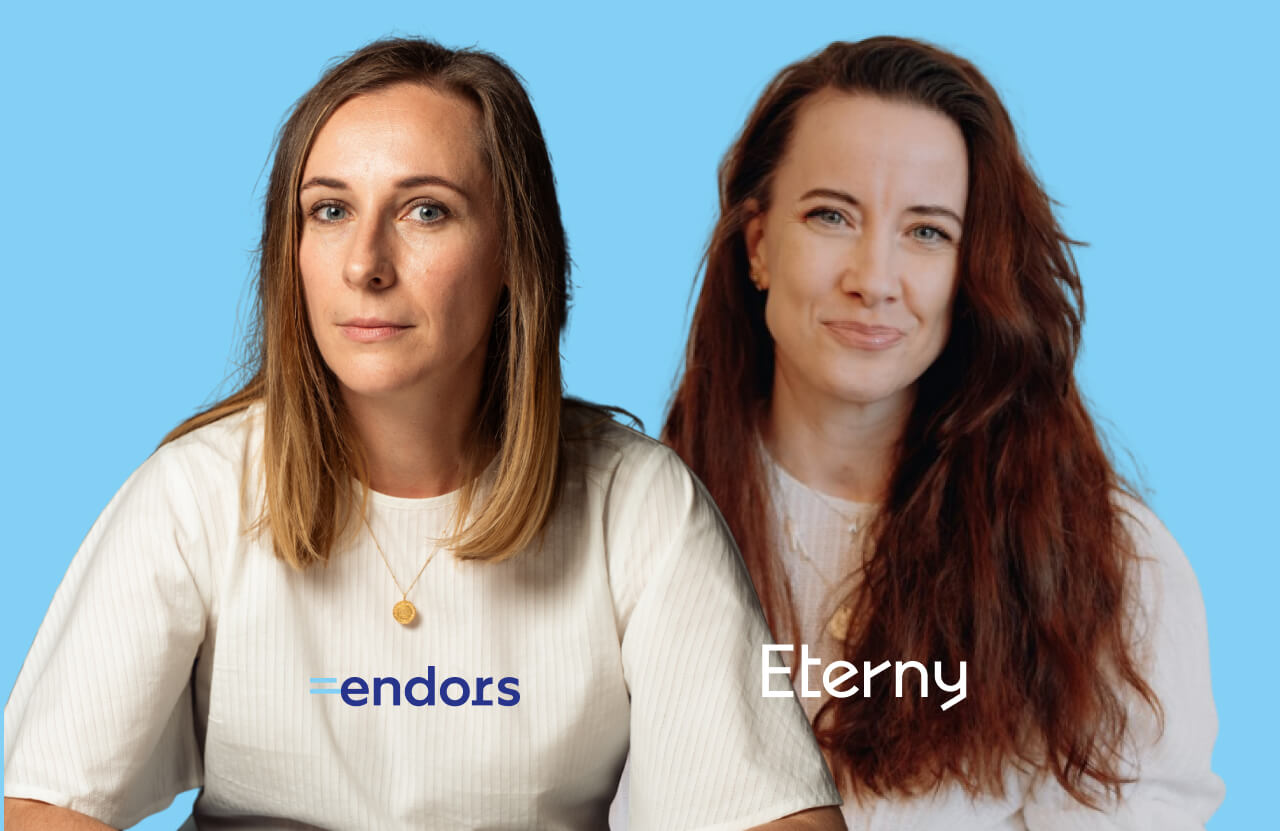
The best thing you can do is to prepare even for what we hope will never happen. That is how the collaboration between the endors law firm and the Eterny platform came about. Kateřina Obertová, our expert in family and inheritance law, and Jitka Paterová, founder and CEO of Eterny, a platform focused on wealth management and the transfer of assets between generations, reveal the ways in which you can leave your assets to your loved ones.
What are people most afraid of when they think about a will? Perhaps having to admit to themselves that one day they will no longer be here. On the other hand, a responsible decision, which may not be pleasant at any given moment, ensures that what you have been building all your life goes where you want it to. And your family will not have to deal with complicated situations at a difficult time.
The older generation approaches wills more responsibly – and knows why. “When I talk about wills with friends, they say: my dad showed me exactly where everything was. He gave me instructions and told me he had it all written down in his will,” says Jitka Paterová, founder of the Eterny app, describing her experience.
For the younger and middle generations, the situation is more complicated. Assets and their composition change, and so do relationships and the ownership tied to them. And perhaps precisely for that reason, it is key to talk about a topic none of us wants to think about, and not to leave it, as the saying goes, until the eleventh hour.
“It all starts with the question: am I happy with how my assets would be divided under the law?” says endors attorney Kateřina Obertová. “And if not, how would I want it to be different?”
To make an informed decision, you need to know how statutory inheritance works. If the deceased did not express their last wishes in any way, inheritance follows the statutory order of succession, which defines exactly who inherits what – although it should be noted that such a division of assets does not always have to match our needs.
The first class – your children and your spouse share everything equally. If one of the children is no longer alive, the inheritance “moves down” to the grandchildren – and so on down the line.
The second class – if you have no descendants, your spouse, your parents, and people who lived with you in a shared household for at least one year and took care of it or were dependent on you for support inherit. They all receive an equal share, but the spouse is always entitled to at least half of the entire estate.
The third class – if there is neither a spouse nor parents, your siblings inherit, together with people who lived with you in a shared household for at least one year before your death and took care of it or were dependent on you for support. All in equal shares.
The fourth class – if there is no one in the third class, your grandparents inherit, each in an equal share.
The fifth class – if your grandparents are no longer alive either, your parents’ grandparents (i.e., your great-grandparents) inherit. Half goes to your father’s grandparents, half to your mother’s grandparents. Within each pair, the share is divided equally.
The sixth class – if no one in the fifth class inherits either, your nephews and nieces (your siblings’ children) and your uncles and aunts (your parents’ siblings) step in. Each in an equal share. If any of them is no longer alive, their children inherit.
If there is no one at all, even in the sixth class, everything passes to the state.
The law has clear rules for your children. So, in addition to the classes of heirs, you also need to keep forced heirs in mind, although it can be assumed that very few people would leave their children out of their will.
“Children – and, if they are no longer alive, their descendants – are so-called forced heirs,” explains Kateřina. “This means you must leave them at least a quarter of what they would receive under the law if they are adults. And three quarters if they are minors.”
It is true that not everything in life turns out the way you imagine, so in certain cases it is possible to “disinherit” your descendants and thus prevent your assets from ending up, say, at the bottom of a bottle.
The law allows this only in specific cases:
When the child did not provide you with help in need even though they could have (support in illness or old age), has shown no interest in you over the long term and ignores you even though you try to maintain the relationship, or has been convicted of a heinous criminal offense.
Or when they persistently lead a dissolute life (repeatedly violate social norms, have problems with alcohol or drugs, do not pay child support for their own children), have committed an intentional criminal offense against you or your loved ones, have forged your will, or are so indebted or wasteful that there is a risk the assets will end up with creditors and nothing will be left for your grandchildren.
Disinheritance, however, is truly a last resort that requires careful justification and legal advice.
Although it might make the whole process easier, there is no template you can download, fill in, and thereby settle the transfer of your assets. Every family, every estate, every relationship is different. That is why it pays to turn to an expert who will go through your specific situation with you.

A will is a key document with which you can decide about your assets and the care of your loved ones after your death. It makes sense to think about it above all if you want your loved ones to inherit your assets differently than the law prescribes. It is also invaluable if your assets have a complicated structure and you want to specify exactly who gets what, or if you have minor children and want to express your wishes as to who should take care of them.
In practice, you have several options:
You write it entirely in your own hand and sign it. You do not need witnesses or a notary. It is the simplest option, but it really must be written entirely in your own hand.
Someone else writes it for you (for example, on a computer), and you sign it and declare before two witnesses that it is your last will.
The most secure option. The notary makes sure everything is correct, the will is harder to challenge, and it has the form of a public instrument.
“With clients, we often first go through what assets they actually have – real estate, investments, accounts, shares in companies. Together, we put together an overview of what they want to leave to whom and how to set it all up so that it makes sense and complies with the law.
Only then do we go with them to a notary and have the will drawn up in the form of a notarial deed. That is exactly why we most often prepare wills in notarial form – it is the most secure route,” adds Kateřina.
Few people know about it, but there is also an inheritance agreement. Unlike a will, you do not write it yourself – it is typically prepared for you by an attorney, and you enter into it with the other party, who must agree to it.
You cannot simply cancel it – by comparison, you can change or revoke a will at any time. An inheritance agreement, however, can only be canceled with the consent of the other party. This gives the other person much greater certainty that they really will inherit something one day.
But note – even if you have an agreement, you can still do whatever you want with your assets during your lifetime. You can sell them, give them away, invest them. The agreement only concerns what remains after your death.
A practical example: Imagine you want your grandson Pavel, who is still a minor, to inherit all of your assets. You enter into an inheritance agreement with your son (Pavel’s father) before a notary:
In it, you appoint your grandson Pavel as your heir. At the same time, your son renounces his right of inheritance. Because an agreement can only dispose of 3/4 of your assets, you must also write a will for the remaining quarter
Your son cannot unilaterally cancel the agreement. Pavel has legal certainty that he really will inherit the assets.
An inheritance agreement makes sense mainly in situations where you want to guarantee that someone will actually receive a certain part of your assets – and the other party agrees. Typically when:
If an inheritance agreement were to leave out forced heirs or allot them less than they are entitled to, the agreement will not be valid in that part. In practice, as we have already mentioned, the forced heirs are the testator’s children and any of their descendants.
Let’s say everything is clear to you and you decide to write your will. Five years later, you buy a property. You invest in stocks and securities. Perhaps you start a company and a family. But you do not reflect any of this in your will.
“Clients often ask us whether they need to update their will regularly. We usually tell them it depends on whether they are happy with how the new assets would be divided under the law,” says Kateřina. “But in most cases, it is better to update the document, because new assets also enter into the calculation for forced heirs.”
The ideal approach: Contact your legal advisor or notary again and write a new will to replace the original one.

A will is not everything. You have bank agreements, investment documents, lease agreements, insurance policies. How often should you think about them?
“That depends on the type of document,” explains Kateřina. “For investments and banking products, checks are needed practically daily or monthly. Purchase agreements for real estate don’t need to be checked that often.”
The basis is to have a folder for your documents – and to know what is in it. Whether paper or digital. It is precisely, though not only, for these cases that Jitka Paterová founded the Eterny service.
An account in Switzerland. Cryptocurrency platforms. Shares in foreign companies. A property in Dubai. How do these variables affect the transfer of assets?
“It doesn’t even have to be foreign investments,” Kateřina points out. “You can have paper share certificates or investments in private companies here in the Czech Republic, not keep a record of them anywhere, and in the event of hospitalization or probate proceedings, that is a big problem.”
A notary has limited means of tracing assets. A property or a car can be traced easily. But investments that are not recorded anywhere? They can be left hanging in a legal vacuum.
Switzerland, the USA, Dubai, other non-EU countries – each country has its own rules.
“In the Emirates, the process is really complicated and often also costly,” says Kateřina. “The legal system there is diametrically different.”
The golden rule: Whenever you invest abroad, ask yourself: “What happens if...?”
Be especially careful with real estate abroad – it is almost always governed by the law of the country where it is located. This means that even if you have a Czech will, a property in Dubai will be inherited under Emirati law.
Uniform rules have applied since 2015.
“The key to successful wealth management starts with a folder – ideally a digital one,” says Jitka.
Why digitalization and platforms like Eterny:
Sometimes people don’t even really know what they have and where. Putting it in order is the first and best thing you can do.”
The more assets you have, the more sense it makes to keep track of them. And it is not just about bank accounts – lease agreements for investment properties also need to be monitored.
“Records and regular checks are always for your own good,” concludes Jitka Paterová.
Yes, you can write a holographic will yourself at home. However, it must be written entirely in your own hand and signed. If you have more complex assets or family relationships, we recommend consulting an attorney and having it drawn up by a notary.
Whenever your assets change significantly (purchase of a property, sale of a company, new investments) or your family circumstances change (birth of a child, divorce, death of a loved one). At the very least, check every 3–5 years that your will still reflects your wishes.
Not entirely. Children are forced heirs and are entitled to a compulsory share – adults to a quarter, minors to three quarters of what they would receive under the law. You can only disinherit them completely in exceptional cases (failure to provide help in need, a heinous criminal offense…).
Statutory inheritance applies according to the classes of heirs. In the first class, your children and your spouse inherit equally. If you have no children, your spouse, your parents and, where applicable, people who lived with you in a shared household inherit. If this division does not suit you, it is worth considering writing a will.
Within the EU, yes – uniform rules have applied for some time now. Outside the EU, it depends on the specific country. Be especially careful with real estate abroad – it is almost always inherited under the law of the country where it is located.
The safest option is official deposit with a notary – the will is recorded in a central register and is used automatically after your death. You can also keep it at home, but let a trusted person know about it.
Yes, you can change or completely revoke your will at any time. All you need to do is write a new will, which automatically revokes all previous ones. Note – this is not possible with an inheritance agreement, which can only be canceled with the consent of the other party.
A will is more flexible – you can change it at any time. An inheritance agreement gives the other party greater certainty, but it can only dispose of 3/4 of your assets and can only be canceled with the consent of the person you entered into it with. An inheritance agreement makes sense mainly when passing on family businesses or when you want to guarantee that someone will really receive the assets.
It is not mandatory, but we recommend it. An attorney will help you map out your assets, advise you on how to set up the inheritance properly with regard to forced heirs, and make sure the will is legally sound. They can then go with you to the notary and oversee the entire process. This will save you future complications.
You can, but as we mention above, inheritance is entirely individual and a template solution may not be enough for you.
Active wealth management and its legal protection are an investment in the peace of mind and stability of your family and your business. Don’t put off dealing with it until it is too late.
Your documents and assets under control. For you and your family. Forever. All your finances, investments, and important documents in one place. Secure, organized, optimized, and always at hand.
Prevention is not about fearing the future, but about protecting what you have today. The best thing you can do for yourself and your loved ones is to prepare even for what none of us wants to think about. Complicated inheritance of assets or difficult divorces – situations where emotions mix with law and money – tend to be challenging. We know from practice that we can prevent most complications – the key is prevention, which is above all about protecting what you have today.
Your story deserves attention.
Treat yourself to a lawyer who will give it that attention, and get in touch with us – info@endors.cz
Often, the best thing you can do for yourself and your loved ones is to prepare even for what we hope will never come. Part of such preparation is also education, through which you can find out what your options are. That is how the collaboration between the endors law firm and the Eterny platform came about.


Only one in ten people over 50 has a will – do you know how to secure your children’s future?