Developing infill sites or brownfields from a legal perspective [How to build in already developed areas]
Developing vacant lots and brownfields offers a solution that doesn't require consuming new land, but it also brings specific legal challenges. Martin Tůma, head of the construction team at endors, wrote an article on brownfields for Development News & Facility Manager, which you can now read here as well.

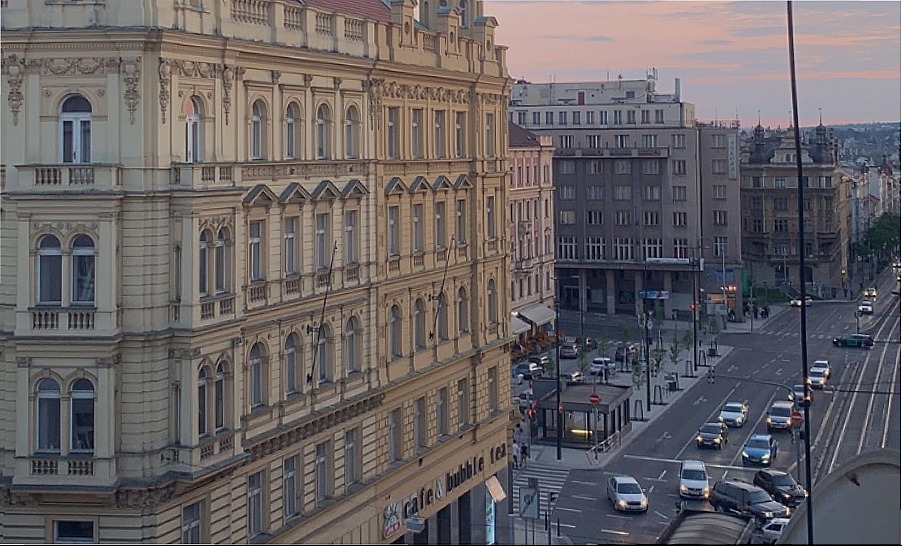
Large and medium-sized cities today face a common problem: a lack of space for new construction. Residential buildings, offices, and civic amenities—everything must fit into already built-up areas. That is why developers and investors are increasingly looking for new opportunities in vacant lots or brownfields. While current legislation does not yet explicitly favor brownfields, the direction is clear. Building on "greenfields" is gradually being restricted, and legislation is pushing developers to utilize already developed land.

What are vacant lots and brownfields?

A vacant lot is an undeveloped space (plot of land) within a continuous urban area that was created by the demolition of a building or was left empty.

A brownfield is an abandoned, unused, or neglected property (land, building, or site).

Why is development shifting into cities?

Several factors are driving the trend toward developing brownfields:

Stricter rules for agricultural land – greenfields

Since 2024, stricter conditions have been in place for building on the highest-quality land in protection classes I and II. According to the Agricultural Land Protection Act, this land can only be built upon in exceptional cases, primarily for public interest projects.

Urban plans prioritize quality of life

‍Local regulations are often based on regional spatial planning requirements to improve environmental quality and residential well-being. In practice, this means that municipalities do not want to further densify development by allowing construction everywhere.

Forest land is virtually untouchable

‍Removing forest land from protection is practically impossible today.

Land on the outskirts of cities is becoming more expensive

‍The market price of developable land is rising significantly, and with it, the mandatory contributions to municipalities for utility connections. Added to this is the complexity of expanding a municipality's buildable area.

"Brownfields offer a realistic alternative—development without consuming new land, often in attractive locations near the city center," emphasizes attorney Martin Tůma.
Even the best project cannot be realized without contracts or permits. We help you bring your plans to life.

How to build on a brownfield

There are two ways to approach development on brownfields: either through new construction or by utilizing existing structures on the site, even if they are in poor condition. All of this, of course, assumes that the zoning plan allows for development on the brownfield site. If it does not, a common tool for securing the necessary zoning change is negotiating a so-called planning agreement, under which the local government (in exchange for a certain contribution) allows the zoning change.

Approach No. 1: New construction from the ground up after demolition

This approach involves first removing the existing structure and only then beginning new construction. It sounds simple, but from our legal practice , we can say that it is certainly not simple, at least from a legislative standpoint.

The process involves:

  • Demolition proceedings (including project documentation to the same extent as for a new construction permit)
  • Confirmation of demolition
  • Subsequent proceedings for the new project permit

Approach No. 2: Reconstruction of an existing structure (change of a completed structure)

It can be much more practical not to treat the entire project as a new build, but as a reconstruction of the existing one. Instead of two sets of proceedings, you only go through one—the procedure for changing a completed structure.

Advantages of this approach:

  • A single building permit process instead of two
  • Option to use an accelerated process if conditions are met
  • Lower costs and time requirements
  • Less room for objections from participants in the proceedings

But there are certain limitations – renovations have their own rules. They must not disrupt the urban character of the area, which in practice means you must maintain the basic volume of the original structure and harmonize with the surrounding development. To put it into a practical example – you cannot simply build a skyscraper where a two-story factory once stood.

What if the brownfield is not in the land registry?

In gaps between buildings and on brownfields, you will often encounter the problem that the structure – or what remains of it – is not registered in the land registry at all. However, this does not mean your plan has to end. There is a solution, but it is quite demanding, so if you have not yet consulted the entire situation with an attorney, now is the right time.

If the structure is preserved enough that the layout of the original building is recognizable (usually the perimeter walls of the first floor are sufficient), you can:

  1. Ask the building authority to issue a certificate of the existence of the structure
  2. With this certificate, apply to the land registry office to record the structure in the land registry
  3. Only then prepare a renovation in accordance with general requirements

A practical summary for investors and developers

If you are considering building on a brownfield or an infill site:

Start with the zoning plan. Find out if you can even build on the land. If not, consider negotiating a change to the zoning plan through a planning agreement.

Consider renovation instead of new construction. The process for modifying an existing structure is faster and cheaper than demolishing an old building and subsequently obtaining permits for a new one.

Check the land registry. If the structure is not registered, obtain a certificate of existence for the building.

Respect the surrounding development. Your project must match the character of the area and preserve the basic volumetric properties of the original structure.

Be prepared for change. Legislation is gradually adapting to the reality of a shortage of building plots, and greater support for brownfield projects can be expected in the future.

Are you planning a construction project on a brownfield or an infill site?

Every property has its own story and every project its own specific conditions. We will help you navigate legal requirements, negotiate a planning agreement, or prepare a strategy for changing the zoning plan. Even the best project cannot be realized without contracts or permits. We help you bring your plans to life.

Contact us at info@endors.cz.

Are you ready for the 2026 amendment to the Building Act?

Starting in July 2026, the rules for building permits, urban planning, and cooperation with municipalities will change. Read our analysis of the 2026 Building Act amendment – we break down 7 key changes and their practical impact.


Are you planning to build on a brownfield or an infill site?
We will help you navigate the legal requirements, negotiate a planning agreement, and prepare a strategy for changing the urban plan.
You will be assisted by the head of our construction team, Martin Tůma
The initial assessment of your situation is completely non-binding
We will help with planning agreements and urban plan changes
Vaše zpráva dorazila do endors
Teď je řada na nás – seznámíme se s vaším dotazem a ozveme se vám do 24 hodin.
Něco se pokazilo. Zkuste odeslat formulář znovu.
RAW_CMS_FAQ: {"@context":"https://schema.org","@type":"FAQPage","mainEntity":[{"@type":"Question","name":"What is an infill site?","acceptedAnswer":{"@type":"Answer","text":"An infill site is an undeveloped space or plot within a continuous urban area that was created by demolishing a building or was left vacant."}},{"@type":"Question","name":"What is a brownfield?","acceptedAnswer":{"@type":"Answer","text":"A brownfield is an abandoned, unused, or neglected property—a plot, building, or entire complex—often located in an attractive area near the city center."}},{"@type":"Question","name":"Why is development shifting toward brownfields and infill sites?","acceptedAnswer":{"@type":"Answer","text":"Since 2024, stricter conditions have been in place for developing high-quality agricultural land (Class I and II protection), forest land is practically untouchable, urban plans prioritize housing quality, and peripheral land is becoming more expensive. Brownfields and infill sites thus offer development opportunities without consuming new land."}},{"@type":"Question","name":"What should I do if the urban plan does not allow development on the plot?","acceptedAnswer":{"@type":"Answer","text":"A common tool is negotiating a planning agreement, under which the local government allows the necessary change to the urban plan in exchange for a certain contribution."}},{"@type":"Question","name":"What is the difference between new construction and renovation on a brownfield?","acceptedAnswer":{"@type":"Answer","text":"New construction requires removing the existing structure first and then permitting a new one, which means two separate proceedings. Renovation is handled as a single proceeding for the modification of a completed structure; it is faster and cheaper, allows for an accelerated process, and leaves less room for objections from participants."}},{"@type":"Question","name":"What are the limitations of renovating an existing structure?","acceptedAnswer":{"@type":"Answer","text":"Renovation must not disrupt the urban character of the area. In practice, you must maintain the basic volumetric properties of the original structure and align with the surrounding development; you cannot build a skyscraper where a two-story factory once stood."}},{"@type":"Question","name":"What if the building is not registered in the cadastre?","acceptedAnswer":{"@type":"Answer","text":"If the structure is preserved enough that the layout of the original building is recognizable—usually the perimeter walls of the first floor are sufficient—you can ask the building authority for a certificate of the building's existence, then use that to apply to the cadastre office for registration, and only then prepare for renovation."}},{"@type":"Question","name":"What should I watch out for when building on a brownfield?","acceptedAnswer":{"@type":"Answer","text":"Start with the urban plan and verify whether you can build on the plot. Consider renovation instead of new construction, check the building's registration in the cadastre, respect the character of the surrounding development, and keep in mind that legislation is increasingly supporting brownfield projects."}}]}